Europe
Interesting Information
History & Culture
Europe has played a central role in shaping world history for thousands of years. Ancient civilizations such as Greece and Rome laid foundations for philosophy, government, art, and law. During the Middle Ages, kingdoms and empires rose across the continent, and the Renaissance brought a flowering of art, science, and literature that influenced the entire world. Europe was also the center of the Industrial Revolution, which transformed economies and societies in the eighteenth and nineteenth centuries.
In the modern era, Europe experienced both world wars, which left lasting scars but also paved the way for cooperation. The creation of the European Union helped bind much of the continent together through shared economic and political ties. Today, Europe is celebrated for its cultural diversity, historic landmarks, and global influence in fields such as art, music, science, and diplomacy.
Population & Language
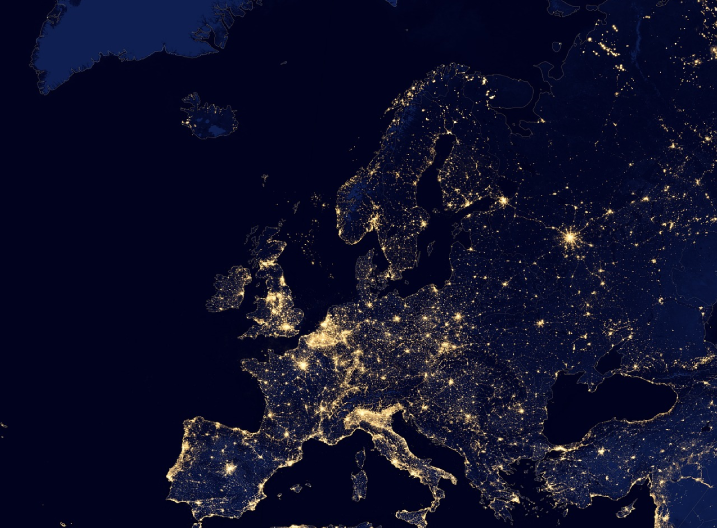
Europe is home to about 750 million people, making it one of the most densely populated continents. Major countries such as Germany, France, the United Kingdom, and Italy are highly urbanized, though rural traditions remain important in many regions.
The continent is linguistically diverse, with over 200 languages spoken. Indo-European languages such as English, French, Spanish, German, Russian, and Italian dominate, but smaller language families such as Uralic (Finnish, Hungarian) and Celtic also remain vital. Multilingualism is common, and many Europeans speak more than one language. Christianity has been historically dominant, though Islam, Judaism, and secular traditions all play important roles in modern Europe.
Geography & Climate
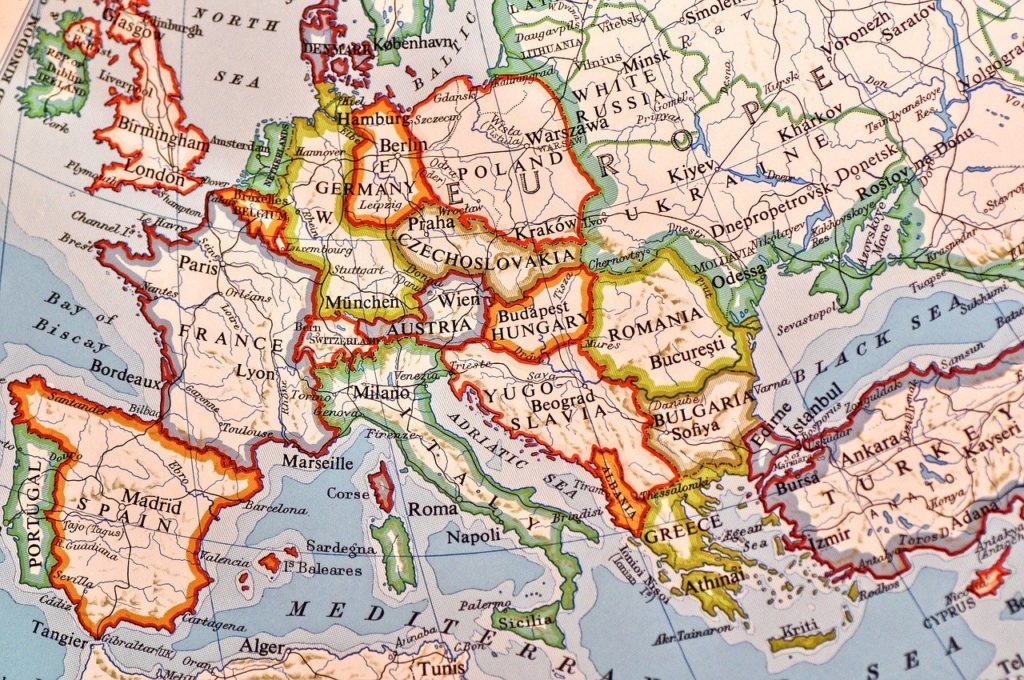
Europe is the second smallest continent by area, covering just over 3.9 million square miles, but its geography is remarkably varied. The Alps and Pyrenees form dramatic mountain ranges, while vast plains stretch across Eastern Europe. Europe’s long coastlines along the Atlantic, Mediterranean, and Baltic seas have shaped trade and culture for centuries. Major rivers such as the Danube, Rhine, and Volga have been crucial for settlement and commerce.
The continent’s climate ranges from the cold Arctic conditions of Scandinavia to the mild Mediterranean coasts. Western Europe has a temperate climate with wet winters and cool summers, while Eastern Europe and Russia experience harsher continental weather. The Mediterranean region is known for hot, dry summers and mild winters, making it one of the most popular tourist regions in the world.
Top Tourist Destinations
Eiffel Tower, Paris, France
Colosseum, Rome, Italy
Acropolis, Athens, Greece
Big Ben and Houses of Parliament, London, UK
Sagrada Familia, Barcelona, Spain
The Louvre, Paris, France
Venice Canals, Italy
Prague Old Town, Czech Republic
Neuschwanstein Castle, Germany
Amsterdam Canals, Netherlands
Most Populated Cities
Istanbul, Turkey
Moscow, Russia
London, United Kingdom
Saint Petersburg, Russia
Berlin, Germany
Madrid, Spain
Kyiv, Ukraine
Rome, Italy
Paris, France
Vienna, Austria
Where do you want to go?

Eastern Europe

Scandinavia

Great Britain and Ireland

Western Europe
Where is it?