District of Columbia
&
United States Territories

Interesting Information

History & Culture

The District of Columbia and the five U.S. territories — Puerto Rico, the U.S. Virgin Islands, Guam, the Northern Mariana Islands, and American Samoa — each hold a unique place in the story of the United States. Washington, D.C. was established in 1790 as the nation’s capital, a federal city designed to serve as the seat of government. The territories joined the U.S. through war, purchase, and agreements in the late nineteenth and early twentieth centuries, most notably after the Spanish-American War of 1898.

Each territory preserves its own cultural identity. Puerto Rico and the U.S. Virgin Islands reflect a rich Caribbean heritage, Guam and the Northern Mariana Islands are rooted in Chamorro and Carolinian traditions, and American Samoa continues strong Polynesian customs. All are deeply shaped by centuries of Indigenous, European, African, and American influences, making this region one of the most diverse in the U.S.

Population & Language

Together, Washington, D.C. and the five territories are home to roughly 4.2 million people. Puerto Rico is the most populous, with over three million residents, while the others range from 50,000 to 170,000 each. English is widely spoken throughout, though it often shares status with local languages. Spanish is the dominant language in Puerto Rico, Chamorro and Carolinian are spoken in the Northern Mariana Islands and Guam, and Samoan remains central to life in American Samoa. The U.S. Virgin Islands primarily speak English, though Spanish and Creole are also common. Washington, D.C., by contrast, is linguistically diverse due to its international community, with English as the primary language and Spanish, French, and Amharic among those also spoken.
Geography & Climate

This region spans from the heart of the continental United States to the Caribbean and the Pacific. Washington, D.C. lies along the Potomac River on the East Coast and features a humid subtropical climate with four distinct seasons. Puerto Rico and the U.S. Virgin Islands are Caribbean islands with tropical marine climates, marked by warm weather year-round and a risk of hurricanes. Guam and the Northern Mariana Islands are located in the western Pacific and feature volcanic landscapes, beaches, and a tropical climate with wet and dry seasons. American Samoa lies in the South Pacific and is characterized by lush volcanic islands, coral reefs, and a hot, humid tropical climate. Together, these locations showcase some of the most varied and far-reaching environments connected to the United States.

Top Tourist Destinations

The White House, Washington, D.C.
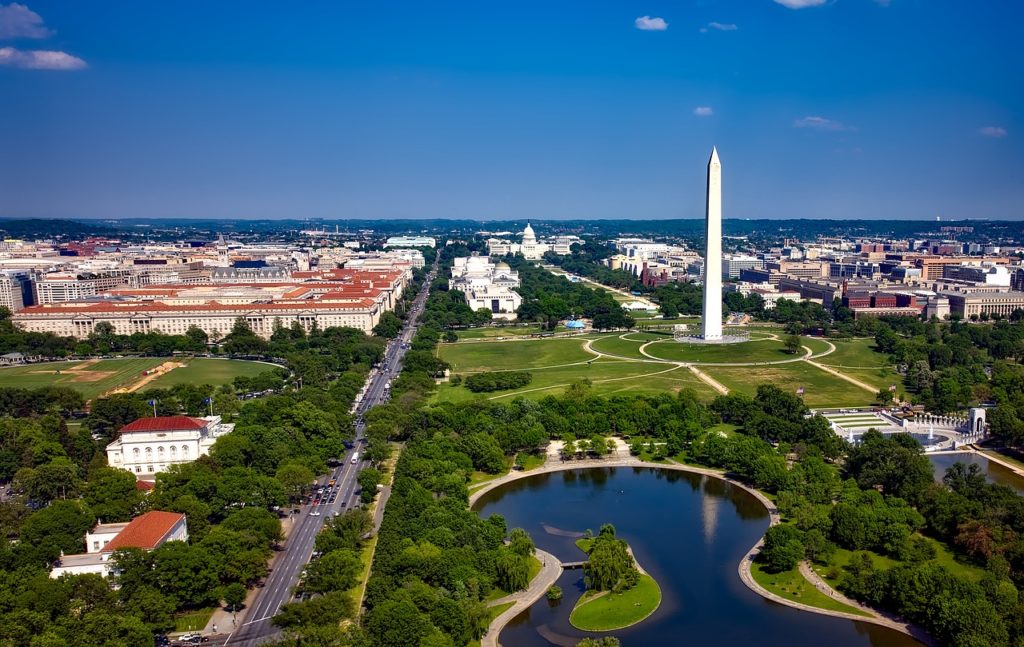
The National Mall, Washington, D.C.
The Capital Building, Washington, D.C.
Old San Juan/El Morro, Puerto Rico
El Yunque, Puerto Rico
Virgin Islands National Park
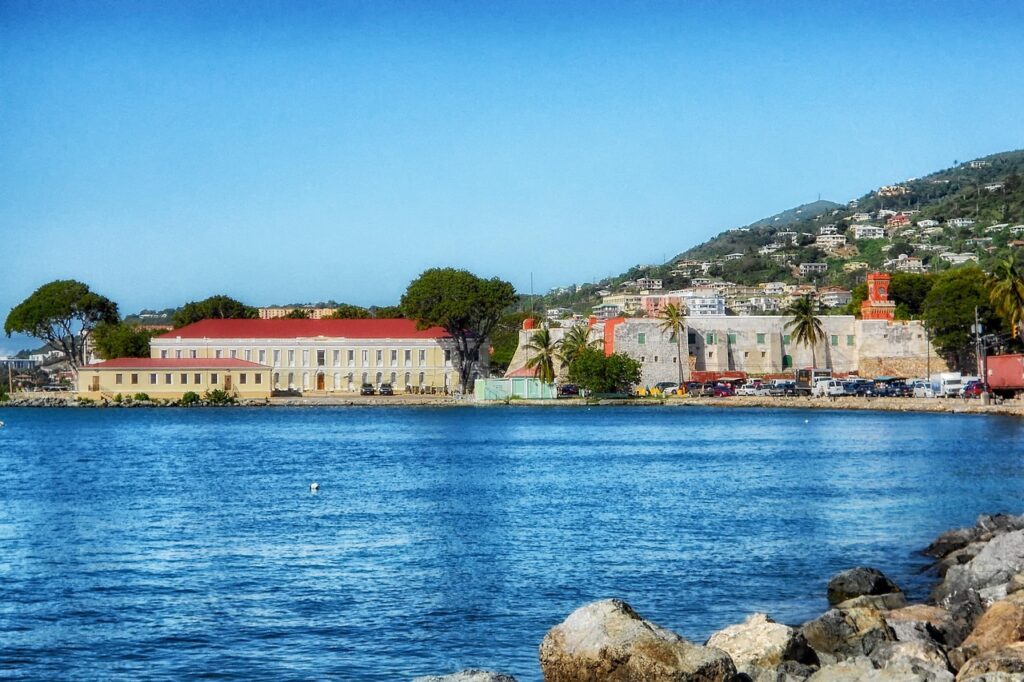
Charlotte Amalie, St. Thomas, V.I.
Tumon Bay, Guam
The Grotto, Northern Mariana Islands
National Park of American Samoa

Most Populated Cities

San Juan, Puerto Rico
Washington, District of Columbia
Bayamon, Puerto Rico
Carolina, Puerto Rico
Ponce, Puerto Rico
Caguas, Puerto Rico
Dededo, Guam
Saipan, Northern Mariana Islands
Charlotte Amalie, St. Thomas, U.S.V.I.
Pago Pago, American Samoa

Where do you want to go?

American Samoa

Puerto Rico

Guam

U.S. Virgin Islands

Northern Mariana Isl.

Washington, D.C.

“Territory is but the body of a nation. The people who inhabit its hills and valleys are its soul, its spirit, its life.”
-James A. Garfield

Where is it?